
There are two terms that take me right back to Austria (“Osterreich” in German).
Heurigen. A heurigen [contraction of heuriger (“this year”) and wein (“wine”)] is the easier of the two to explain. For several brief weeks during wine season in the fall, winemakers (on alternating days) open up (in yesteryears it was announced by a wreath of conifer branches appearing above the doorway) their vineyards to the public. Among several vintages, guests had the chance to enjoy sturm, young fermented wine. The best way to describe sturm (as I am a relative wine novice so lack the fancy vocabulary) is something akin to a strong but cloudy grape juice and a not yet fully bubbled champagne.
As these heurigen became increasingly popular, customers began bringing their own food to pair with the wine. Eventually, many of the vineyards added open-air taverns, where guests could relax and enjoy purchased food (usually cold cuts, cheese, and pickled vegetables) and wine. Sometimes local musicians also performed.

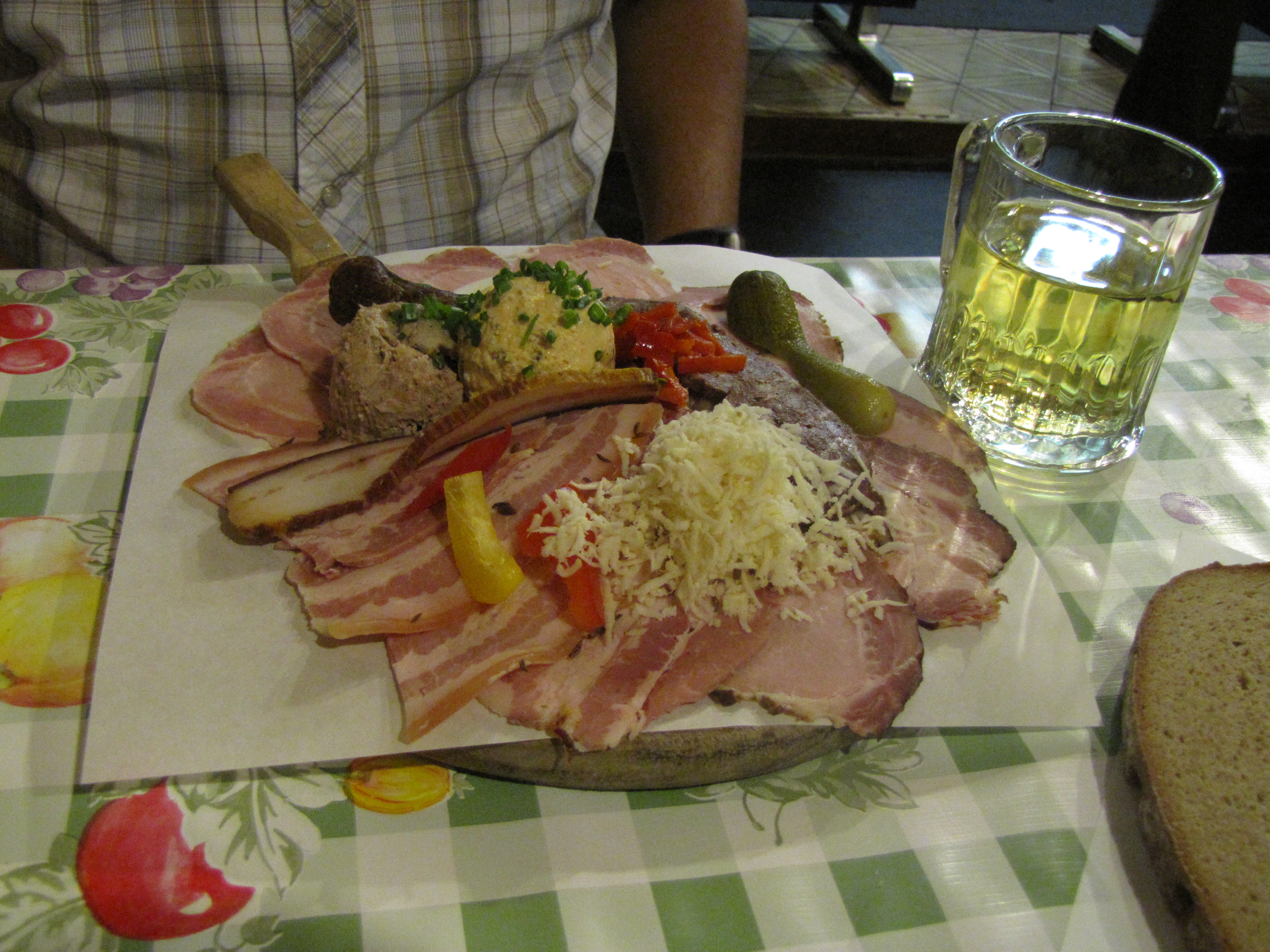
Gemutlichkeit. Now Gemutlichkeit is more difficult to describe as it is intangible, it is a concept. On the surface it is that sense of camaraderie or conviviality that can emerge in a place like a heurigen, where people are enjoying themselves and being around others. But beneath is also the acceptance of things as they are: contentment. Heidi once described it to us as people complaining about how terrible a job the government was doing, then accepting that the government was doing a terrible job and not being able to do something about it themselves, and then at the end heading off to a heurigen for a drink.
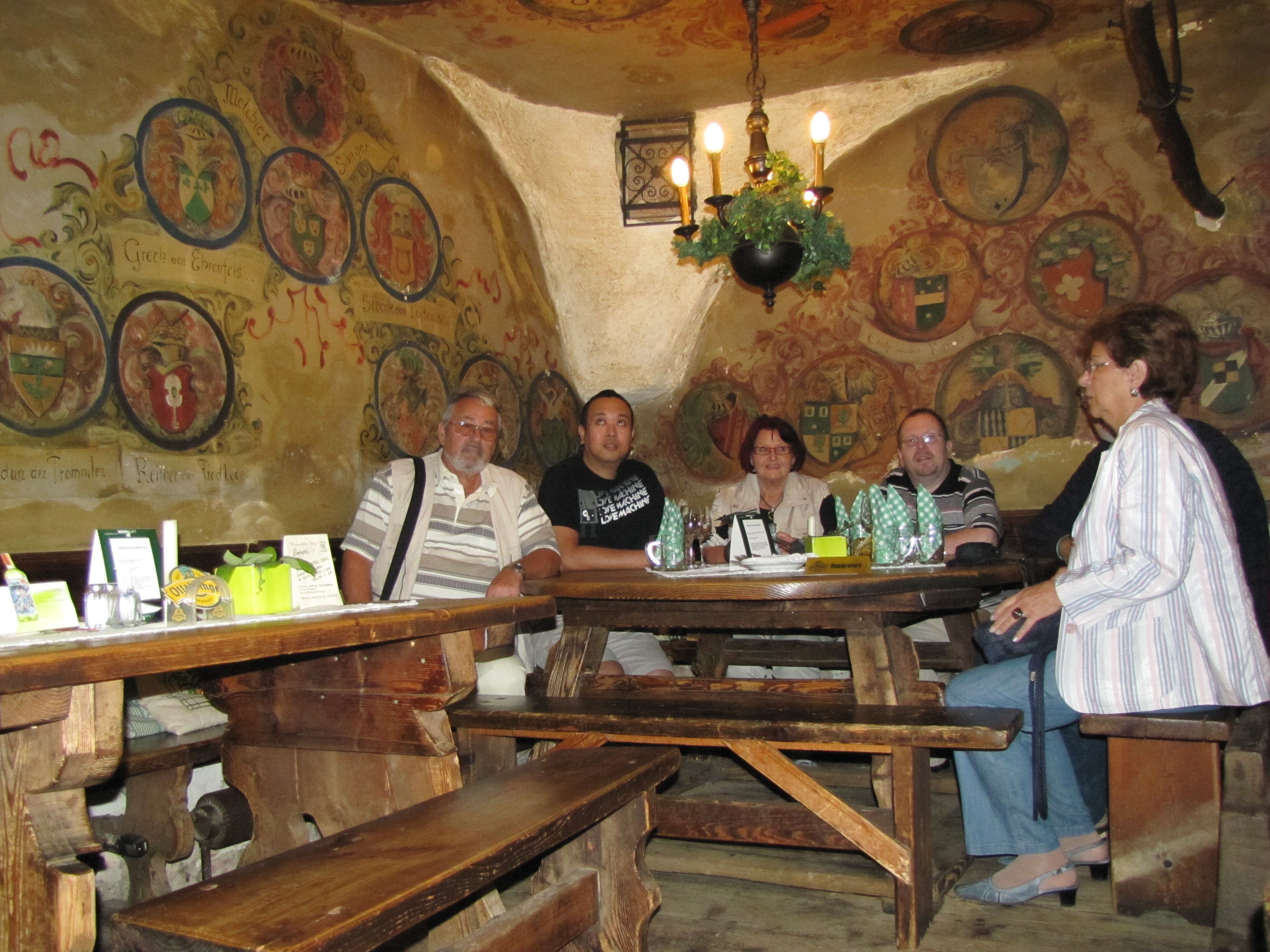
BONUS WORD: Prost. The Germanic equivalent of “cheers”.
And as fate would have it, Bob’s moment arrived in the Heurigen parking lot!


Leave a comment