Our narrow focus led us to overlook many of the important historical sites of the once and former capital city of Al-Andalus. By the 10th century, Cordoba was already one of the most advanced cities in the world, recognized for its culture, learning, and religious tolerance.
FUN FACT: The contributions of ancient Arabia to the world are vast and multi-faceted. The number 0. The decimal system. The bane of many highschoolers: Algebra. The first hospital. The first university. Anesthesia. Surgical instruments. Soap. The toothbrush. Coffee. Banking. The astrolabe. Syrup. The magnifying glass. The list goes on.
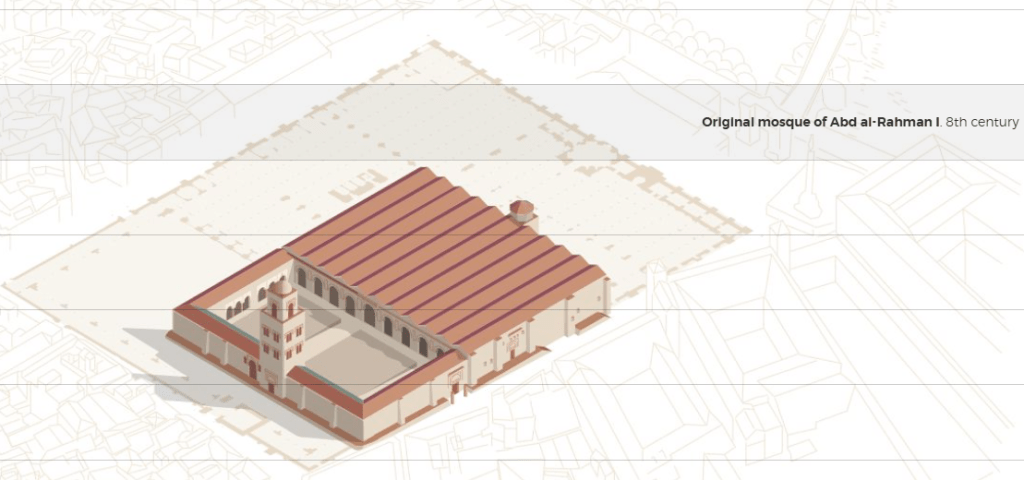
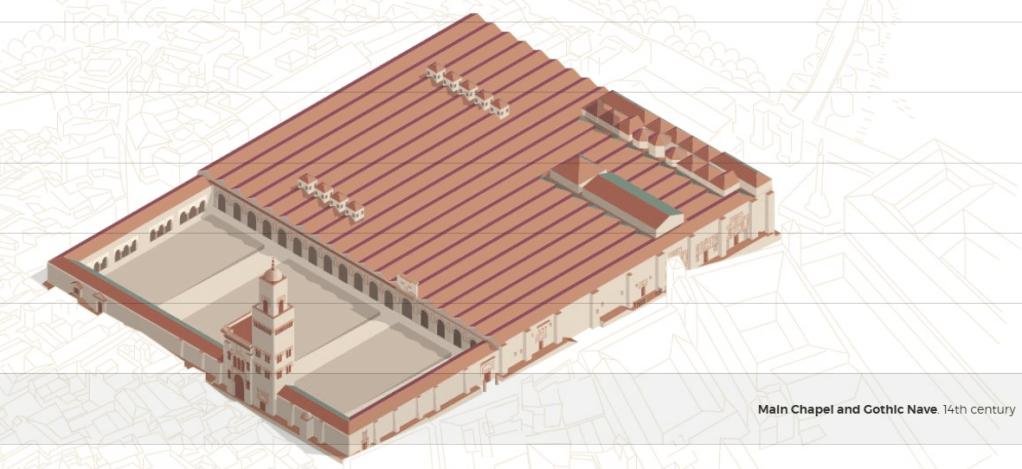
The Mezquita (Spanish for “mosque”) is the sparkling jewel of Qurtubah (the Arabic name for Cordoba). Construction of the Great Mosque (masjid in Arabic) began in the 8th century and was expanded by subsequent Muslim rulers until the Reconquista in 1236 when it was converted into a Catholic Cathedral. It was built in quintessential mosque fashion but with what I believe was a spectacular addition.
A masjid centers around a large open area (haram) for prayer. There is typically an adjoining courtyard (sahn) before entering the main structure; think of it as the transition space between the outside secular world and the inner religious one. The sahn customarily contains several fountains where followers can perform ablution (ritual washing) before entering the prayer hall. The qibla, a highly decorated wall within the mosque, contains the mihrab or niche that orients practitioners’ prayers toward the Kaaba in Mecca, the religion’s spiritual heart on the earthly plane. Similar to the pulpit in the Christian faith, the elevated minbar is used by the imam (religious leader of the mosque) to lead prayers and deliver sermons. The call to prayer is made atop the towering minaret, which also serves a symbol of the faith for anyone within ear and eyeshot.
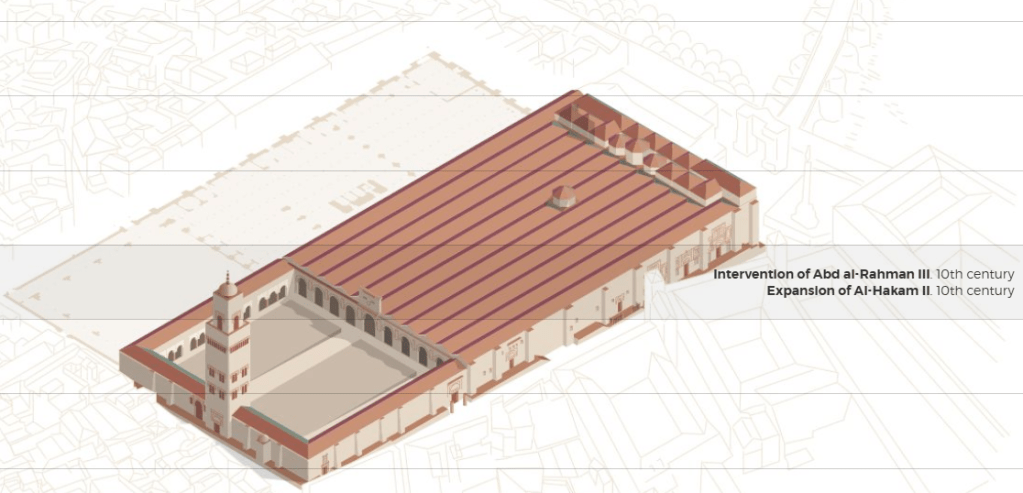
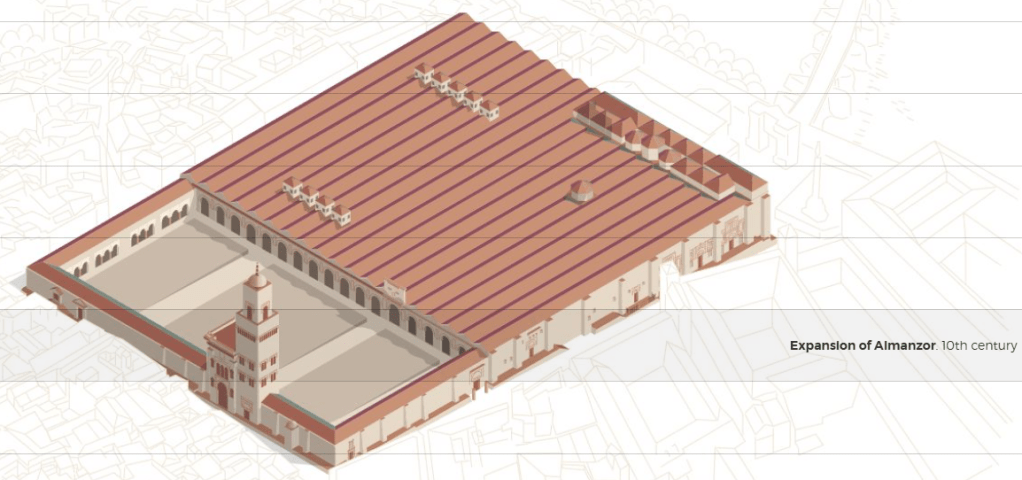

What is most striking about the interior of the Great Mosque of Cordoba is the use of striated hypostyle (Greek for “under columns”) design. From certain angles, visitors are given the impression that the arched columns continue to eternity. For Muslims, this visual limitlessness would have been a reminder of the temporariness of this physical life and the perpetual one with Allah in heaven.


Leave a comment