
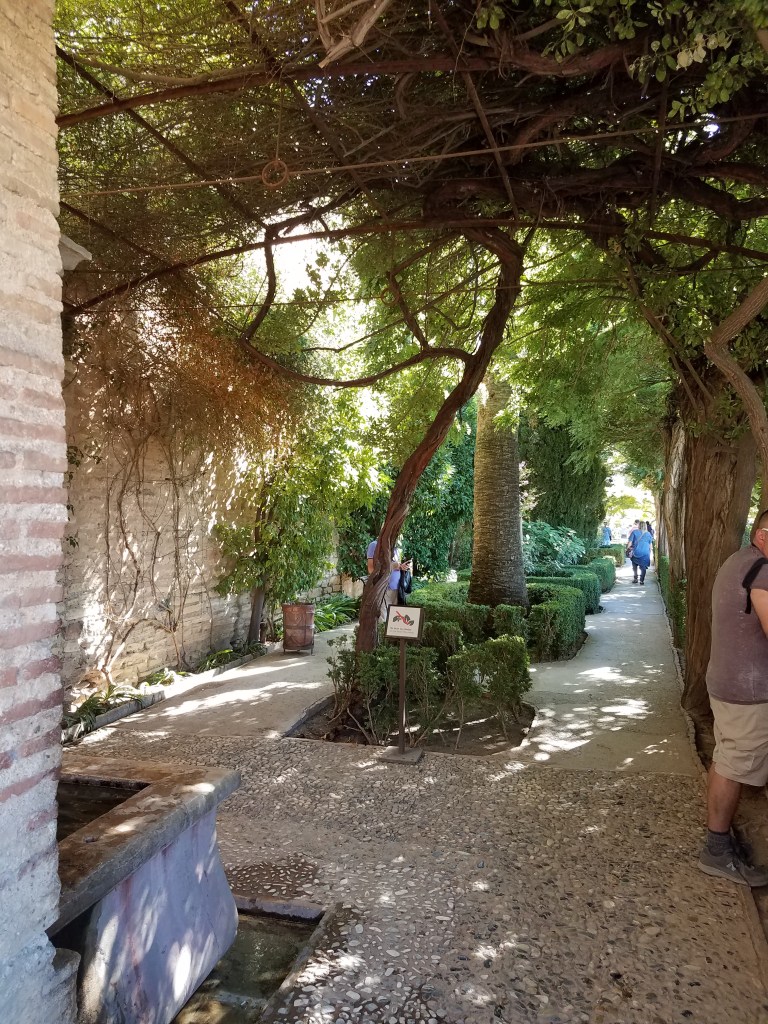
A panoramic stroll along the tree-lined Jardin de los Adarves (“rampart” in English) on the southern edge of the Alcazaba leads back to the real gems of The Alhambra.
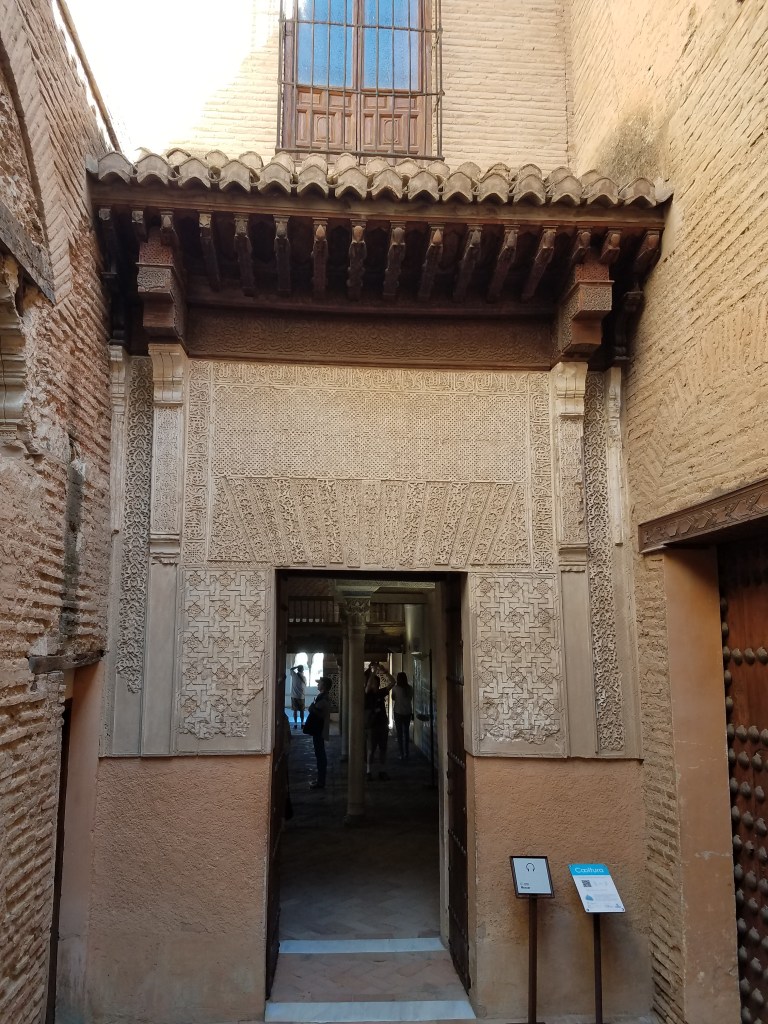
With its intricate embellishments, the doorway of the Sala del Muxuar beckons visitors to the wonders that lay just beyond. The Sala or “hall” in Spanish was the entrance wing that lead to the Nasrid Palaces (Palacio Nazaries/Nazaries Palaces)–a cluster of apartments, hallways, and courts, interwoven with arcades, fountains, and gardens. This was the domain of the emir and his harem. An Emir was the title for an Arab male who was a high-ranking military official or who held political office. A harem was the living area specifically set aside for the women of the household–wives, concubines, female relatives, and servants.
FUN FACT: In the ancient Arab world, kingdoms were known as “caliphates”. The term comes from the Arabic word khalifa (Romanized to “caliph”), meaning”successor”.
The two main sects of Islam, Shia and Sunni, stem from the disagreement of who would lead the faith after the death of the prophet Muhammad [peace be upon him], the central figure of the religion. Shiites believe the successor should be chosen by the Muslim community; Sunni followers held that only a descendant of the prophet should succeed, namely Muhammad’s cousin and son-in-law, Ali.
Caliphates are generally named after their founder. The Nasrid Caliphate was coined after Muhammad I ibn Nasr. The name would continue for as long as the lineage bore male heirs or until overtaken by a competing Caliphate.


Leave a comment