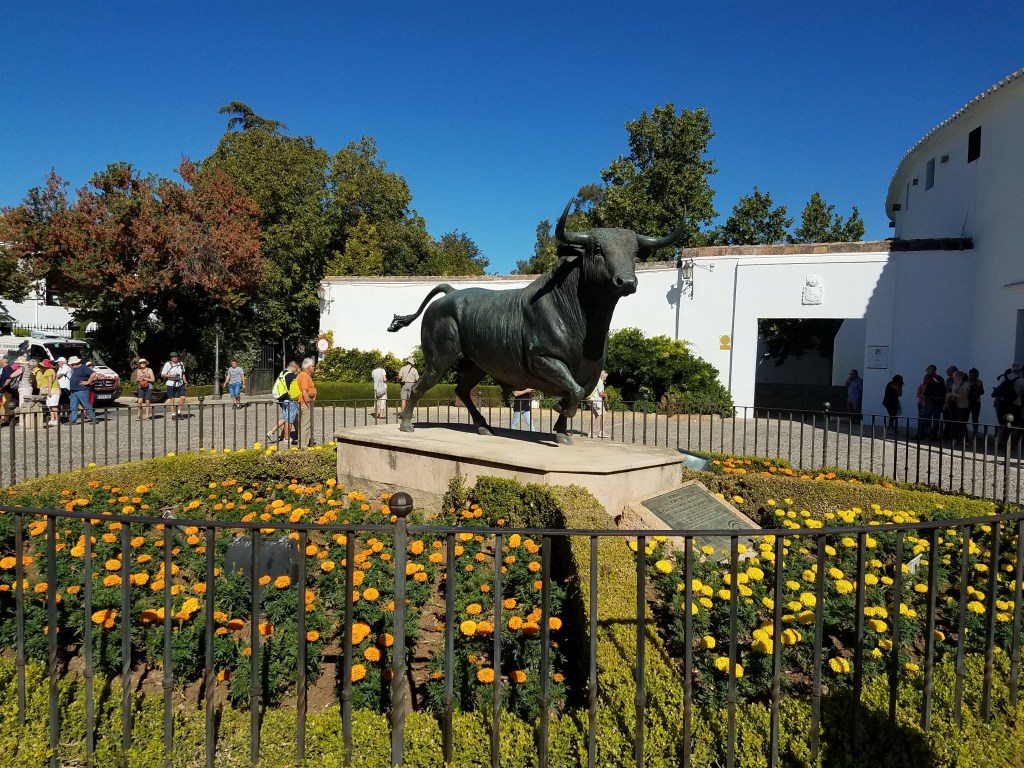
It wasn’t until much later that I understood why animal activists had made such a big fuss.
I had a romantic notion of bull-fighting. A handsome dark-haired matador in a body-hugging brocade costume (traje de luces or “suit of light”) stares down a hulking beast of an animal. With his muleta fluttering in the breeze he taunts the bull to charge. The creature, eyes bloodshot, rushes forward in a blind rage. Before the moment of impact, the bullfighter swerves gracefully and the beast misses its intended target. This infuriates the animal to no end. The heartstopping near misses occur again and again to the delight of roaring spectators.
We were in Ronda, the birthplace of modern bullfighting (corrida de toros). What differentiates bullfighting of old from present-day is the absence of horses. It is believed that steedless dueling began with Ronda-native Francesco Romero’s request to kill the bull on foot after a fight, face to face. Previous to this daring stunt, bullfighters would dispatch the animal while on horseback. The legendary matador is also credited with using a muleta (cape) and estoque (sword) to end the creatures’s life. More on that gruesome detail later.
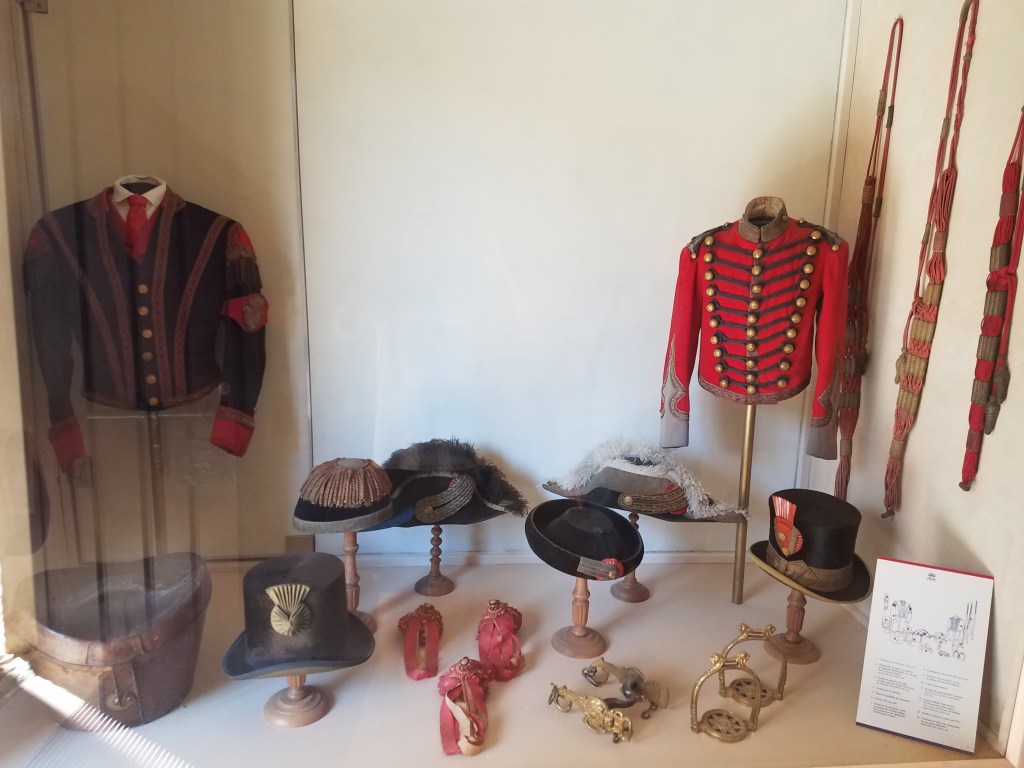
The Real Maestranza de Caballeria de Ronda is a treasure trove for those interested in all things bullfighting. In the narrow museum that skirts the bullfighting ring, visitors can examine the finery of matadors’ uniforms.
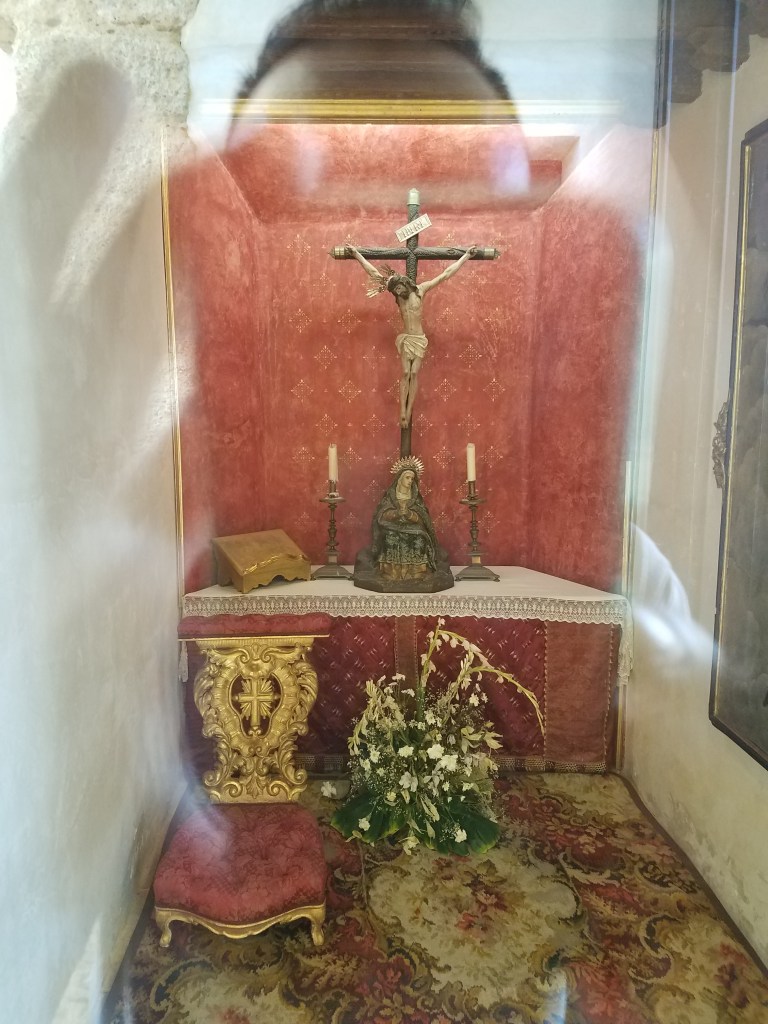
An unexpected surprise was to find a replica of a shrine where bullfighter’s would say a prayer for safety and a successful outcome before a match.
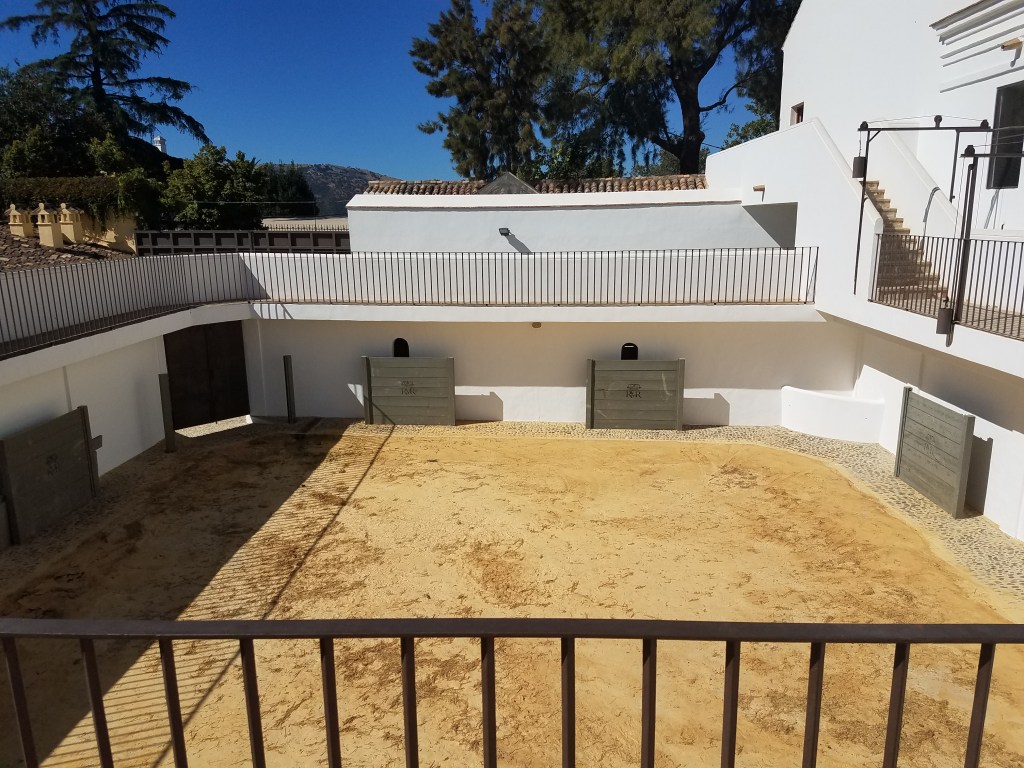
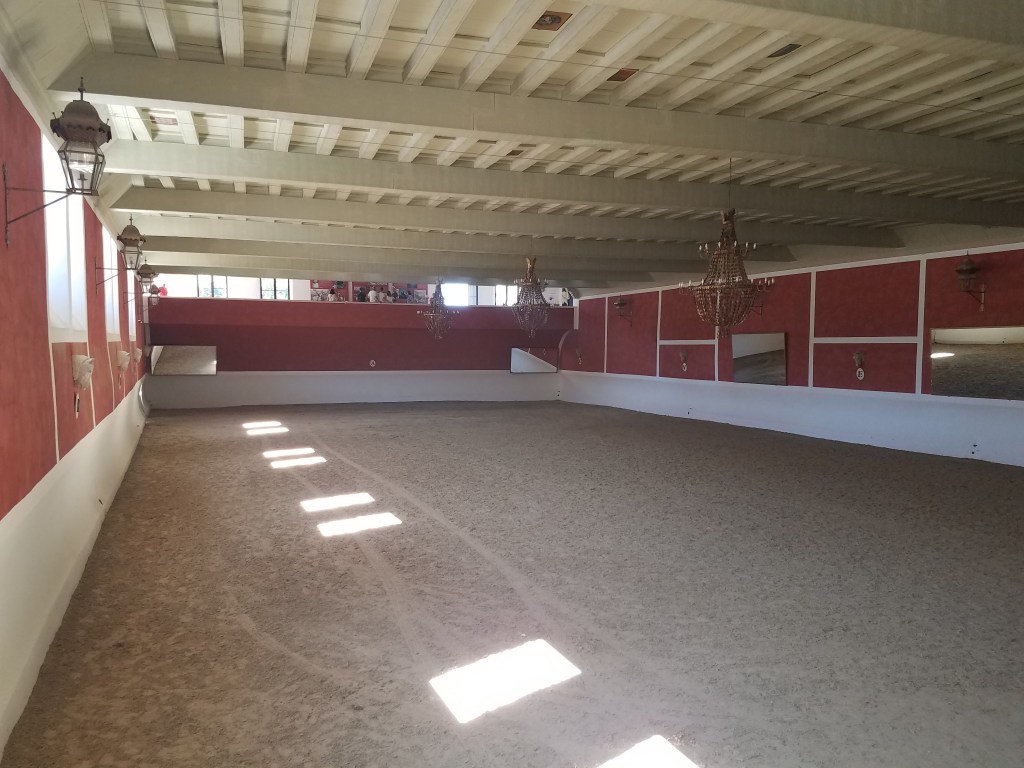
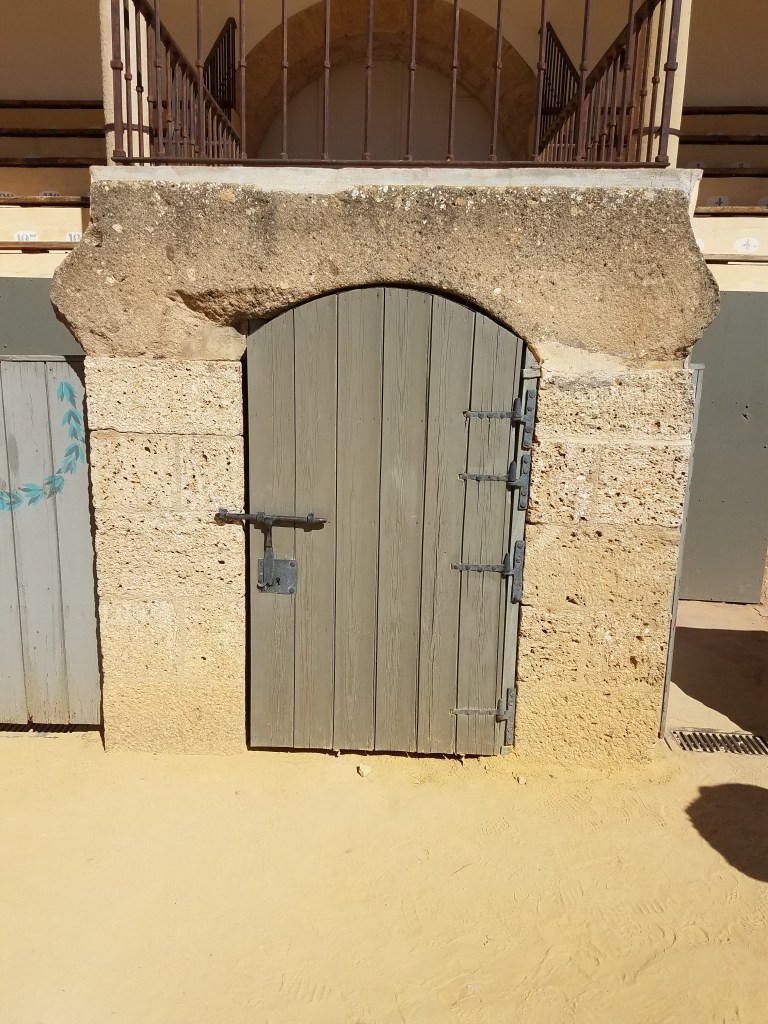
The circular design of the dueling “stage” lends some credence to the supposed artistry of the corrida de toros.
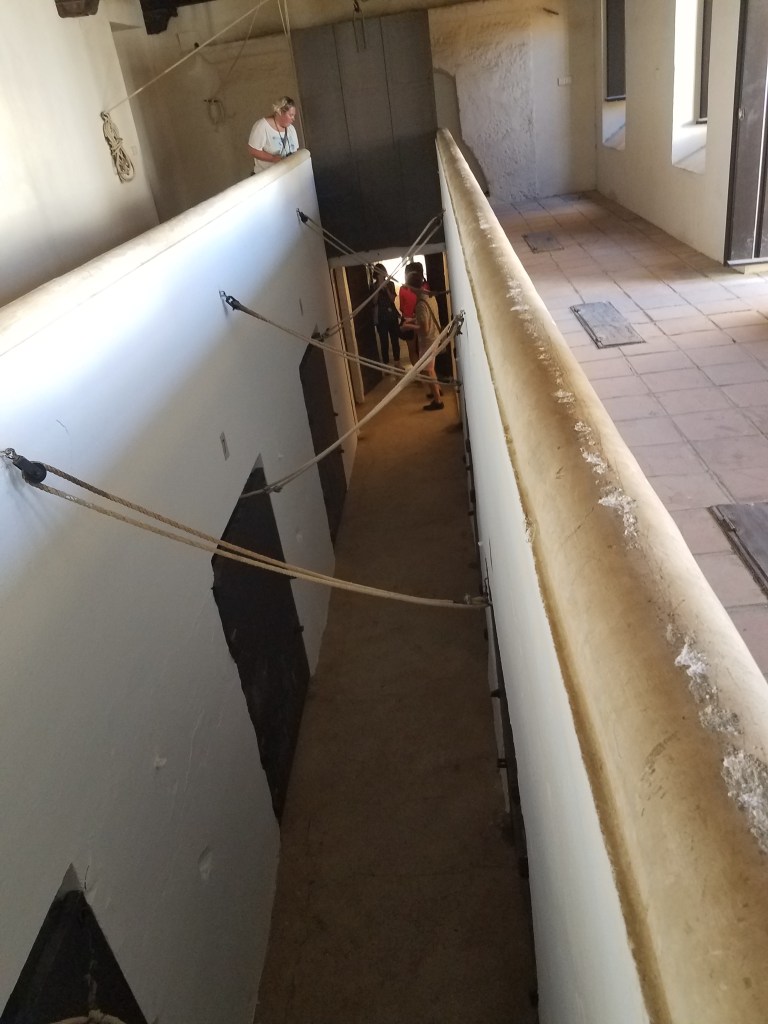
Like its two-legged protagonist, the bovine has its own dedicated dressing room and passage way to the main platform.


Leave a comment