In modern times, the term riad has become synonymous with restored Moroccan guesthouses featuring shared common areas and private rooms.
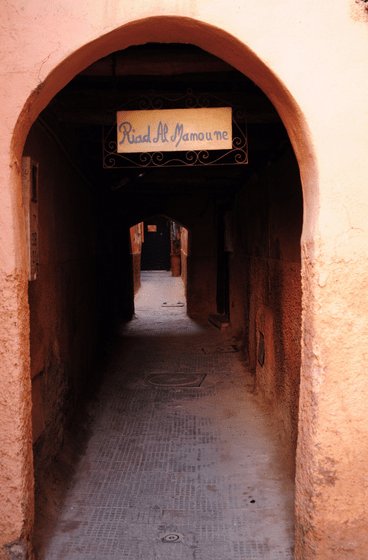
We stayed at the Riad Al Mamoune during our time in Marrakesh. The entrance to the guesthouse was hidden in a covered walkway; a relic of an older and more uncertain time that became a nuisance for the 21st century traveler.
What was revealed beyond the doorway resembled the dreamscape of an adolescent fantasy. A square-shaped inner courtyard. Bougainvilleas clambering up to second floor railings. A towering banana tree in the corner laden with fruit. A potted citrus tree. Miniature palms placed around the perimeter. A soaking pool on the north wall, directly opposite our private room. Ornate pendulum lamps hanging from each archway. An upper level with more apartments. A cut out in the ceiling revealing the azure Moroccan sky. A terraced rooftop with ample room for family, friends, and guests to lounge at sunset, sunbathe, or dine in the warm open air with the twinkling lights of the city in the background.
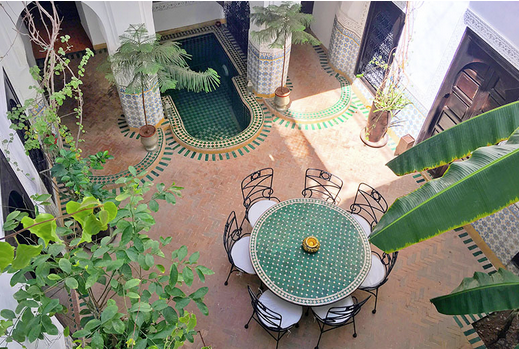
FUN FACT. The courtyard is not simply ornamental. It serves one very important function among several others. In hot climates, courtyards limit the exposure to direct sunlight; alternating surfaces are kept in the shade throughout the day. What light manages to penetrate is absorbed by walls, delaying transfer to interior spaces. At night, the stored heat is released back into the courtyard, allowing cooler air to settle and circulate. Adding a water fountain or other water feature compounds this cooling effect.
The Sultana was furnished as if it had been torn out of the pages of The Thousand and One Nights. Gossamer drapes set against a wrought-iron window frame. A low slung bed with tasseled pillows. Dark finely carved furniture. Warm earthy hued walls. Intricately woven rugs. Torch motif lamps above the headboard.
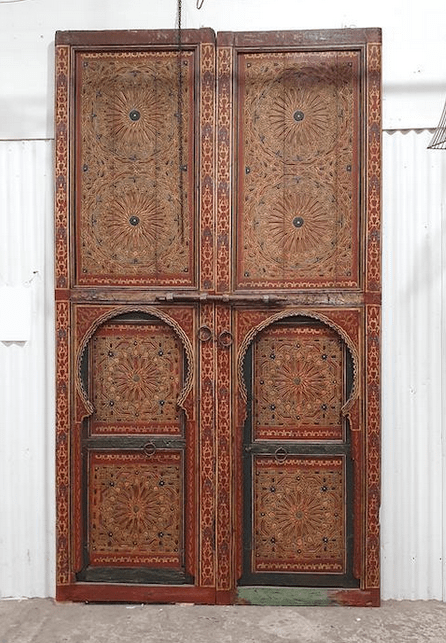
FUN FACT. Some doors in a riad are curiously inset with a secondary door. These smaller entrances serve two purposes. For outside doors, the appropriate size would be opened. Guests? Pets? Small door. Furniture? Beasts of burden? Large door. Opening the right size would prevent unnecessary heat from entering the building in the summer and escaping in the winter. The second function was cultural. Most entrants would physically bow to enter, which served as a constant reminder of the importance of humility in Moroccan (and the larger Arabic) culture.


Leave a Reply